
Vision with a Plan
Everyone loves a big idea, but on its own, it’s just noise. What sets successful entrepreneurs apart is clarity knowing exactly where they’re headed and how they plan to get there. Vague goals don’t build momentum. Clear vision does.
Start with the end in mind and reverse engineer the path. Whether you’re building a side hustle or going full tilt on a startup, being able to map out your direction helps you make sharper decisions and avoid wasted effort.
Just as important: bring your team along from the beginning. That doesn’t mean constant pep talks it means laying down a mission that matters and being transparent about the playbook. When everyone understands not just the “what” but the “why,” they’re more likely to own the journey. Alignment beats charisma every time.
Decisiveness
Strong leadership requires the ability to move quickly, strategically, and with confidence even when the path isn’t perfectly clear.
Why Decisiveness Matters
Startups move fast. The window of opportunity is often short, and waiting too long to act can mean missing a crucial moment.
Your team follows your lead. Clear, timely decisions create momentum and build trust.
Speed resets the feedback loop. The faster you decide, the faster you can learn what works and what needs to change.
Making Informed Decisions (With Incomplete Data)
Perfect information is a luxury most early stage entrepreneurs don’t have. Learning how to act on available insights without freezing up is essential.
Prioritize action over perfection.
Weigh risks through frameworks like pros vs. cons, best/worst case scenarios, or potential ROI.
Be transparent with your team when you’re making a call based on instincts or limited data.
Fix Mistakes Fast But Don’t Stall
It’s okay to be wrong. It’s not okay to be paralyzed by uncertainty.
Decisions can be corrected; indecision creates drift and confusion.
Build systems that allow for course corrections without losing momentum.
Use mistakes as data points not identity markers.
Being decisive doesn’t mean being reckless. It means you’re willing to lead from the front, even when the road ahead is still being paved.
Emotional Intelligence
Good leaders don’t just talk they observe, they listen, and they respond with intent. Reading the room isn’t about being soft; it’s about being smart. Emotional intelligence is knowing when to push harder and when to pull back. It’s about recognizing burnout before it hits and spotting friction before it turns into fallout.
Empathy doesn’t mean avoiding conflict it means handling it without wreckage. The best leaders ask, not assume. They hold space for feedback and know when silence says more than words. In fast moving entrepreneurial environments, it’s easy to get tunnel vision on metrics, but ignoring your people usually costs more than any missed KPI.
Retention isn’t just about perks or pay. It’s about creating a team culture where people feel seen, heard, and valued. Companies built on empathy tend to have lower turnover, stronger loyalty, and higher output. Not because they’re soft but because they’re real.
Resilience

Failure isn’t rare. It’s baked into the process. If you’re building something real, you’re going to hit walls cash flow crunches, bad hires, launches that flop. That’s not personal. That’s startup life. What separates leaders from the rest isn’t how often they fall it’s how fast and how well they get back up.
Setbacks aren’t signs to quit. They’re feedback. Every misstep teaches. Learn what didn’t land, fix what you can, and revise the playbook. Entrepreneurs who survive aren’t always the smartest in the room they’re the ones who can take a gut punch, reset, and push forward with clarity.
Mental durability is the edge. It means staring down uncertainty without folding. It means staying clearheaded when things go sideways. Intelligence helps. So does capital. But neither outruns grit. When you build that muscle, you become hard to knock out.
Delegation
You can’t out hustle your calendar. There are only 24 hours in a day, and if you’re spending them all grinding through tasks someone else could do, you’re the bottleneck. Effective entrepreneurs know when to step back so they can step up.
Delegation isn’t about dumping work it’s about trust. If you constantly hover or correct every minor move, your team won’t grow, and neither will your business. Give people space to own outcomes. When they succeed, it frees you up. When they miss the mark, it’s an opportunity to coach, not control.
The real win? Spending your energy where it matters most. That means $1,000/hour decisions like strategy, partnerships, or product vision not chasing inbox zero or tweaking slide decks. Time is leverage. Use it upstream.
Communication
Clear beats clever. Every time. If you want to lead really lead you need to be understood without a second thought. That starts with your pitch. One line. No jargon. If your product or vision takes more than 10 seconds to explain, you’ve still got work to do.
But it’s not just about investors. Your team has to know where you’re headed and why it matters. No one rallies behind vague. Weekly updates should be bite sized but meaningful. Progress, blockers, next steps no fluff.
Same goes for customers. Can they tell what problem you solve? In plain language? If not, they won’t care long enough to click. The best founders make even complex businesses sound obvious.
Sharpen everything. Your one liner. Your decks. Your updates. Because in a noisy world, clarity cuts through.
Networking with Intent
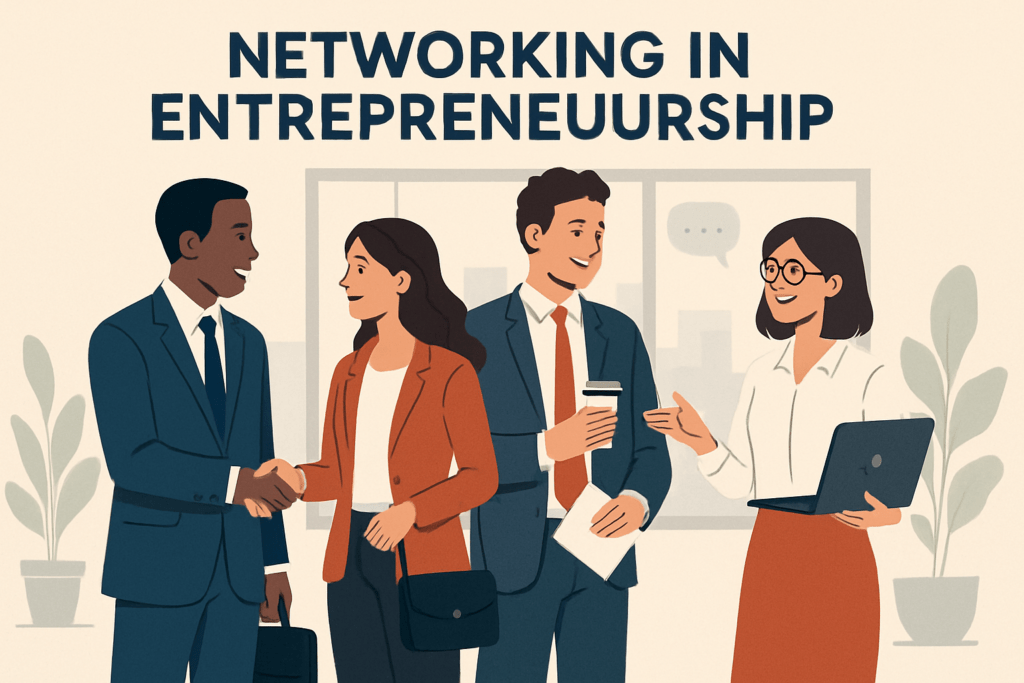
Cold DMs and scattered LinkedIn requests won’t cut it. Real traction comes from real connections people who know you, trust you, and can vouch for you. These aren’t just social ties; they’re strategic levers. One warm intro beats a hundred pitch blasts. Whether you’re raising funding or landing your next client, relationships move things faster.
Networking gets a bad rap because too many treat it like a numbers game. It’s not. It’s a value game. Show up where the conversations are happening, contribute instead of promoting, and make it easy for people to remember you. Follow up without being needy. Keep the loop warm.
Done right, your network becomes an engine not just for opportunities, but also for insight, feedback, and accountability.
Want to make it tactical? Check out this breakdown on networking in entrepreneurship.