
AI Driven Innovation
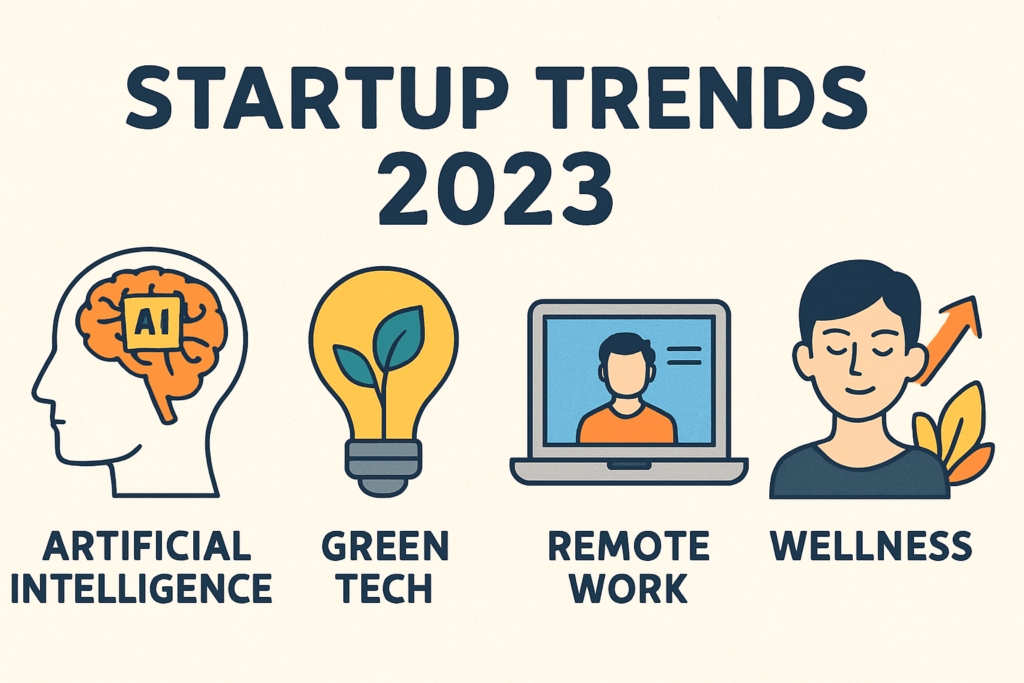
Startups aren’t just automating grunt work anymore they’re pushing AI into creative, strategic territory. Generative models are now embedded in design tools, writing platforms, code assistants, and more. What used to take a team and weeks of iteration can now start with a solid AI prompt and a human editor.
AI copilots are becoming standard across SaaS, serving as on demand partners for users who want more speed without sacrificing flexibility. These copilots help users write better emails, clean up data, or brainstorm legal clauses without ever leaving the dashboard.
Meanwhile, applied AI is becoming sharper and more specific. In healthtech, startups are targeting diagnostics and patient flow. In legaltech, they’re breaking down case law and streamlining compliance work. Cybersecurity AI focuses on pattern detection at machine speed a key edge as threats get weirder and more dynamic.
The story here isn’t about AI replacing founders or teams. It’s about startups finally wielding AI as a tool that scales thought, speeds output, and sharpens focus across nearly every vertical.
Explore more on key startup trends
Sustainable Tech That Performs
Sustainability isn’t just a buzzword anymore it’s product strategy. Startups are scaling carbon capture that actually works, not just for science papers but for real industrial applications. Energy efficient chips and servers are carving space in the hardware game, especially as data centers swell. Then there’s foodtech, quietly rethinking how we grow and consume from lab grown meat to precision fermentation that skips the animal entirely.
Packaging and construction are also getting an upgrade. New startups are leaning into bio based, compostable, and recycled materials that don’t just check a green box they outperform traditional plastics and concrete. It’s not about looking clean; it’s about building better stuff that lasts and leaves less behind.
And while venture capital is cooling off in most sectors, cleantech is riding its own wave. Investors know the climate crisis isn’t slowing down, and startups with tight tech and a clear emissions angle are still closing rounds. In a risk heavy market, sustainable performance sells.
Web3 In a New Light

Web3 isn’t shouting from the rooftops anymore and that’s a good thing. The hype is cooling, but what’s left is leaner and more serious. Startups in the space are getting practical, solving actual problems instead of chasing token pumps. Think decentralized data storage that works like Dropbox, but with user ownership. Or blockchain infrastructure that quietly powers backend logistics.
Crypto payments are starting to make real moves, too. Not for speculation, but for small businesses, freelancers, and users in unstable economies who need reliable, borderless transactions. It’s about real world application now, not just whitepapers and Discord hype.
More importantly, new Web3 startups are building with compliance and security in mind from day one. Regulation friendly design isn’t an afterthought it’s baked into the product. This signals a maturing space, where longevity beats headline buzz. For founders and investors, it’s a clear shift: Web3 isn’t dead. It’s just grown up.
Industrial Automation 2.0
Once the domain of deep pocketed manufacturers, industrial automation is now coming within reach for small and midsize enterprises (SMEs). Off the shelf robotics and subscription based platforms are lowering both the cost and complexity barriers, allowing leaner teams to automate repetitive tasks and boost output.
But the machinery alone isn’t the full story. What’s powering this shift is the fusion of AI and IoT. Smart sensors feed factory data into machine learning systems that can detect issues before they become problems. The result: fewer breakdowns, tighter safety protocols, and more predictable operations, all without adding headcount.
At the edge of all this sits edge computing literally. By processing data locally on machines instead of in distant cloud servers, manufacturers can make split second decisions. Think autonomous robots avoiding spills, or systems that reroute production lines on the fly.
What used to take entire departments now fits in a connected, compact stack. It’s not just upgrade or die now it’s automate or fall behind.
Learn more about key startup trends across industries
Augmented Reality for More Than Gaming
AR isn’t just a novelty anymore. It’s moving into spaces that need utility, not just wow factor. In retail, it’s showing up as virtual try ons and interactive showrooms that shrink the gap between online and in store. In training, AR overlays are helping frontline workers and technicians learn on the job less manuals, more hands on instruction. Remote teams are using it to collaborate in 3D environments that make Zoom calls feel outdated.
Startups are catching on. Many that started out chasing mobile game downloads are now pivoting hard into enterprise and productivity. Think real time repair instructions, remote design reviews, or even AR guided surgery prep. These aren’t just demos they’re in the field.
There’s also a clear move toward minimal hardware experiences. No one wants to strap on a headset for hours. Phone and glasses based AR is gaining appeal, and the best startups are building for the gear people already have. In short: AR is growing up, and it’s doing it by getting useful.
Where to Pay Attention Next
The noise never stops, but a few areas in the startup world still cut through clean. Healthtech is seeing real traction not hype thanks to smarter AI diagnostics and consumer friendly biohacking tools. Think precision medicine, at home blood testing, wearables that decode cortisol levels not just track steps. Startups here aren’t chasing trends; they’re trying to give people real time insight into their own bodies.
Quantum computing is no longer just a lab experiment. Is it mainstream? Not yet. But startups are carving out enterprise use cases logistics optimization, chemical modeling, encryption that massive industries care about. The hype is cooling, but the applications are quietly becoming real.
Lastly, Voice UI and ambient computing are showing up in places that feel practical: drive through ordering, warehouse tools, home automation. Startups are refining how machines respond to us without needing screens or keyboards. It’s not flashy, but it’s a shift worth watching.
Bottom line: keep your eyes on companies merging utility with next gen tech. These aren’t moonshots they’re building things that work now, with a clear path forward.